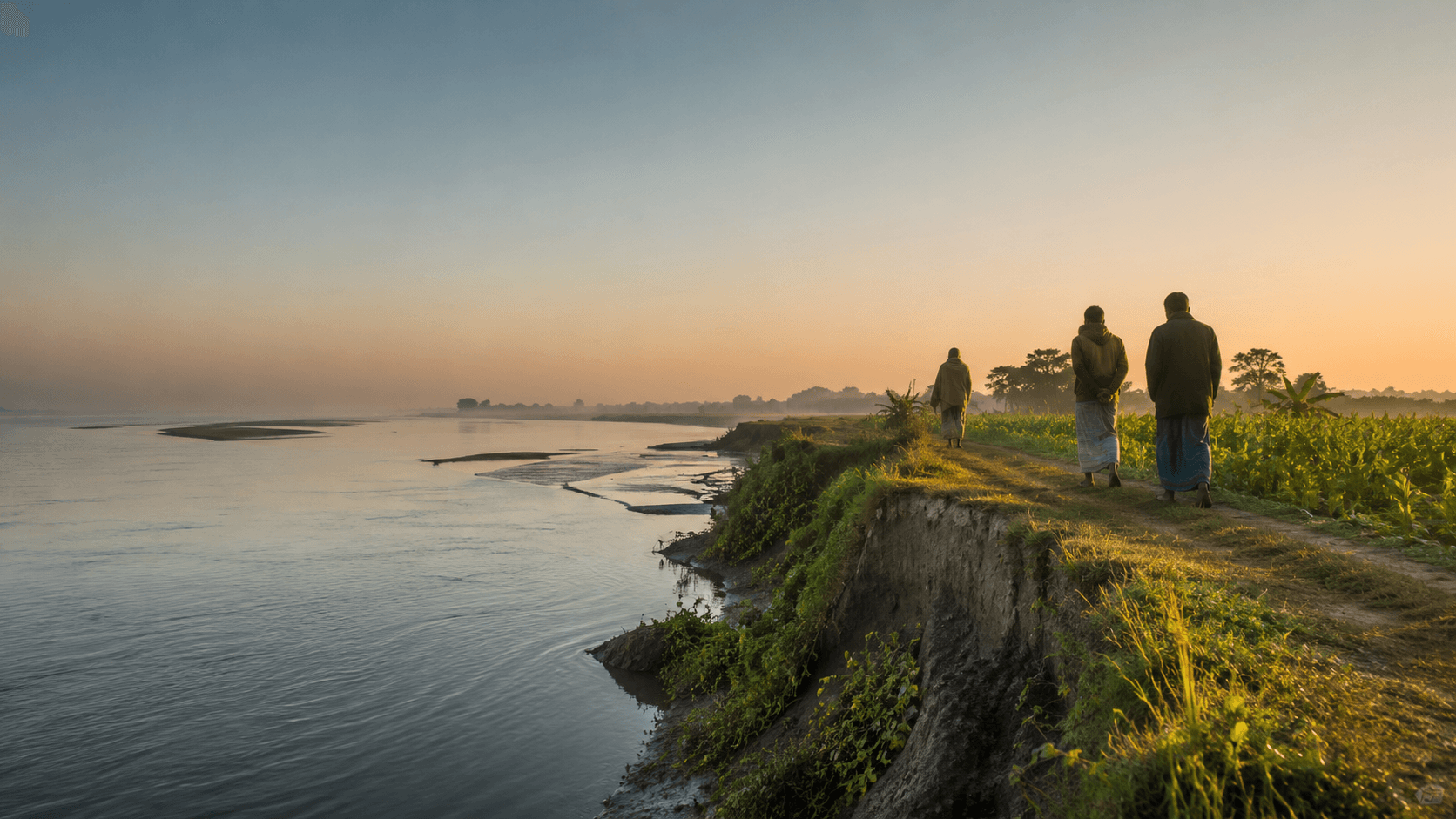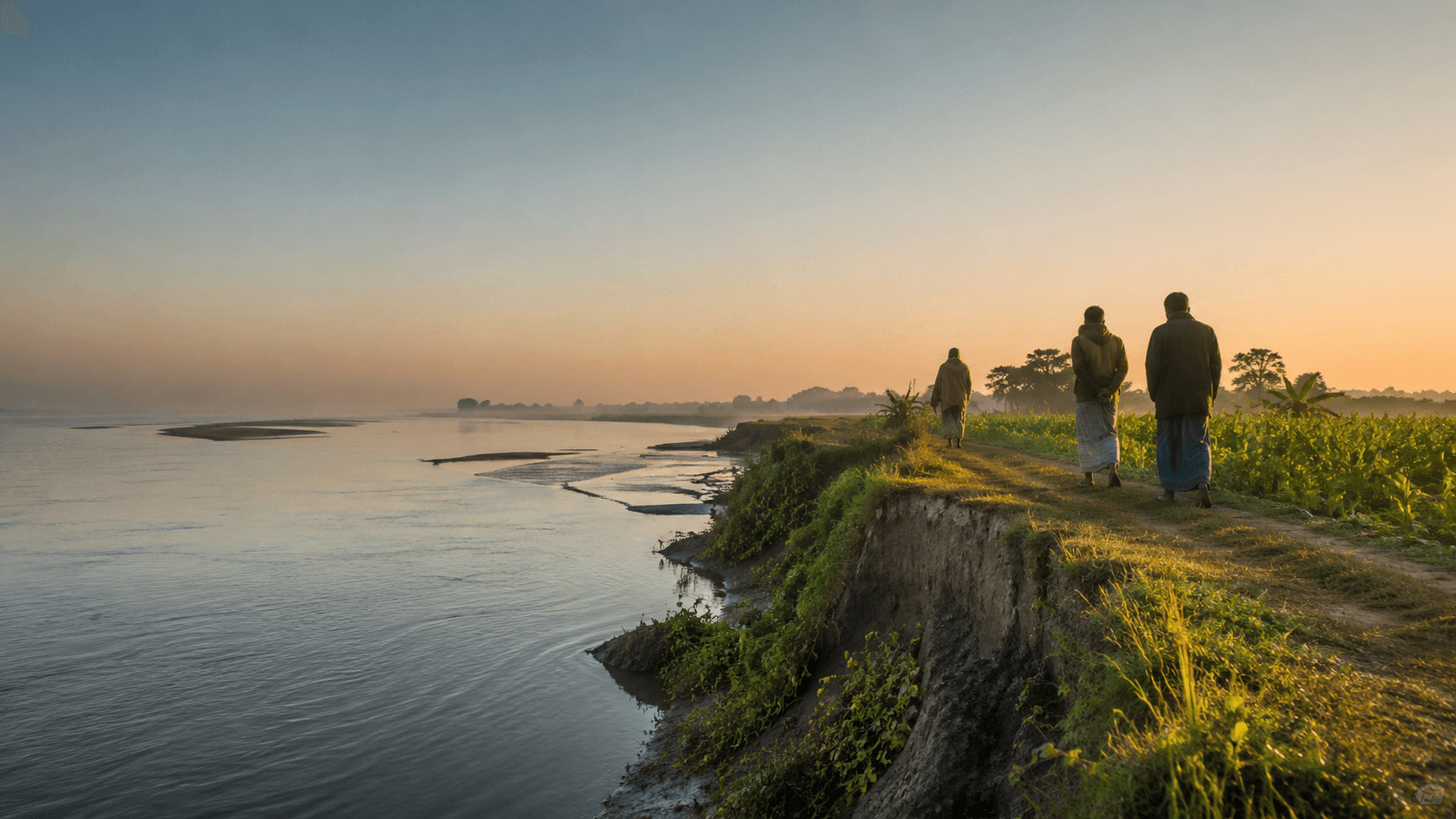
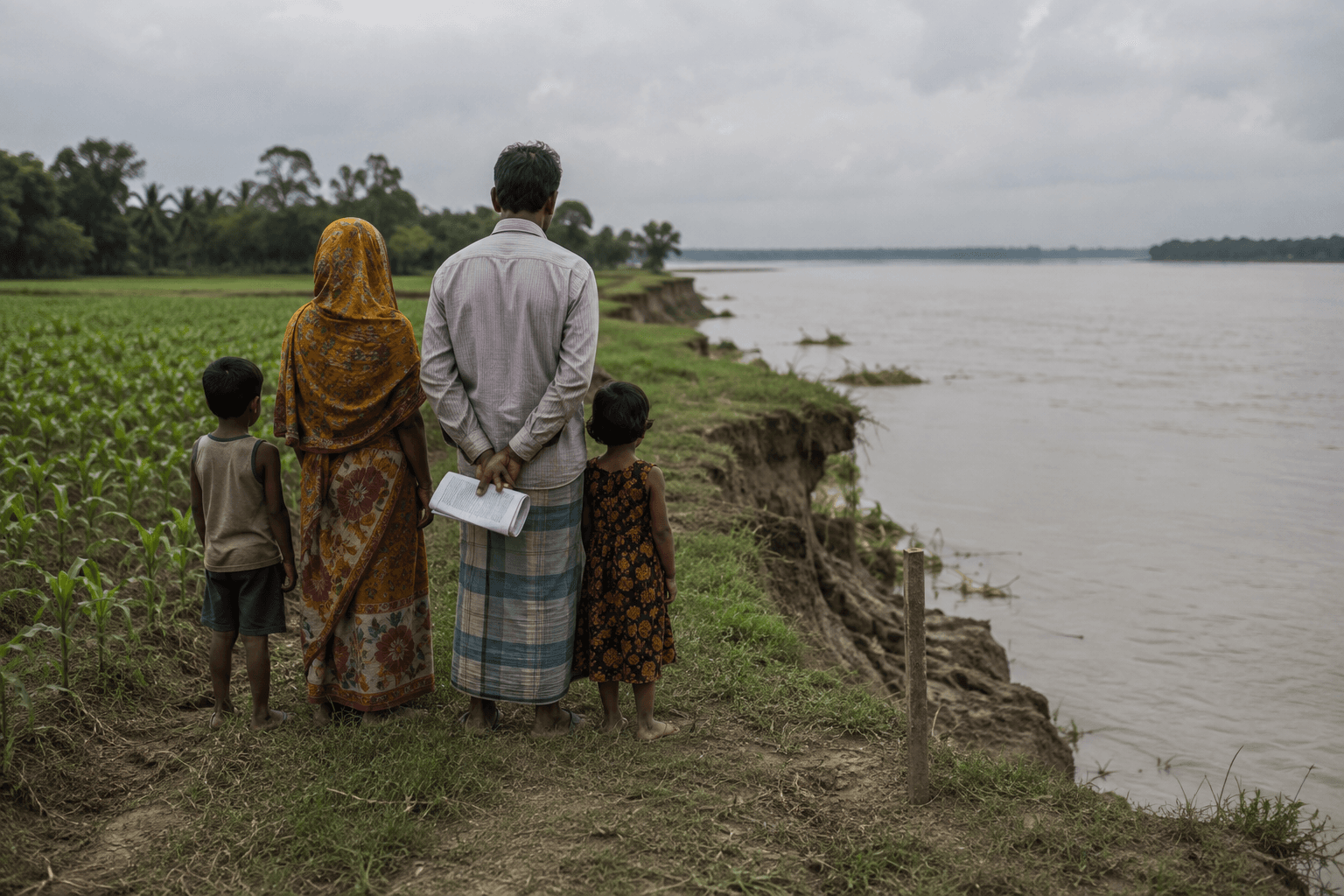
Riverbank erosion can remove the physical evidence of land while leaving families trapped in systems that still expect documents, boundaries, and a permanent address.
A physical loss becomes a legal crisis
When land disappears, affected families can lose more than shelter and income. They may also lose the practical ability to prove ownership, access services, challenge encroachment, or qualify for support.
Women, smallholders, sharecroppers, and households with incomplete records can face additional barriers as boundaries shift and informal arrangements become harder to defend.
Documentation must survive displacement
Resilient land governance requires secure, understandable records and procedures designed for people whose plots, landmarks, or local offices have been affected by erosion.
Legal support should be available early, before distress sales, fraudulent claims, or repeated displacement make recovery even harder.
From relief to durable policy
Temporary shelter is necessary, but it is not a complete response. Families need clear pathways to replacement land, secure tenure, fair compensation, and participation in decisions about relocation.
My Right connects individual land protection with the structural policy reforms required for climate displacement at scale.
What a rights-based response requires
- Create erosion-resilient land documentation and legal support.
- Prevent land grabbing during and after displacement.
- Build secure tenure into relocation and recovery policy.
Published by My Right on 29 August 2026.